

Struggling with rising construction costs and long project timelines? You’re not alone. Material prices have jumped over 40% in recent years, making traditional building methods less practical for growing businesses. That’s why steel warehouse buildings are becoming the smart alternative. They’re fast to build, cost-effective, and scalable, ideal for everything from distribution and storage to light manufacturing.
In this blog, we’ll break down what you need to know before building: real-world costs, size options, how steel compares to traditional materials, and the key planning steps like permits, layouts, and timelines, so you can build with confidence.
What Is a Steel Warehouse Building?
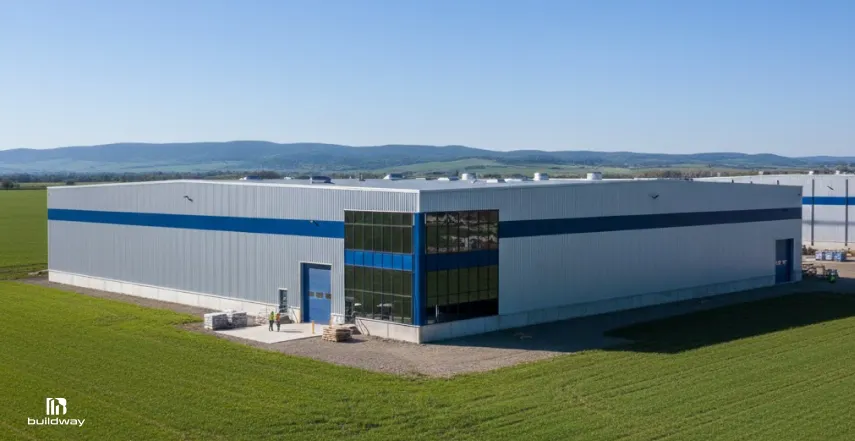
A steel warehouse building is a structure primarily made of steel components, typically designed for storage, manufacturing, logistics, or distribution purposes. These buildings are known for their durability, fast assembly, low maintenance, and customizable layouts.
They can be designed as pre-engineered metal buildings (PEMBs): prefabricated systems engineered for quick and cost-efficient assembly on-site. This approach significantly reduces construction timelines compared to traditional methods. With proper planning, these buildings can also be designed to support future mezzanine levels, allowing for vertical expansion without increasing the footprint.
Common Business Use Cases
Steel warehouse buildings are known for their flexibility, making them a popular choice across various industries. From storage to heavy-duty operations, their design easily adapts to different business needs. Here are some of the most common applications:
- Storage & Fulfillment Centers: Used for e-commerce, retail, and bulk inventory. It’s ideal for racking systems and efficient product handling.
- Logistics & Distribution Hubs: Support high-clearance storage, loading bays, and fast truck access for streamlined operations.
- Manufacturing & Assembly Plants: Open layouts accommodate heavy equipment, production lines, and overhead cranes.
- Equipment & Fleet Storage: Protects valuable machinery, trucks, and vehicles with secure, weather-resistant shelter.
- Multi-Level Office or Storage Areas: Mezzanine-ready steel buildings can support future second-floor additions for offices, breakrooms, or additional storage without new construction.
Steel Warehouse vs Traditional Construction
Choosing the right warehouse structure is a major investment and comparing materials is a crucial first step. Steel warehouse buildings are often weighed against concrete, wood, and pole barn alternatives for cost, durability, and build speed.
Here’s a breakdown of how each option compares in key areas that matter to businesses.
Steel vs Concrete Warehouses
| Feature | Steel Warehouse | Concrete Warehouse |
| Construction Time | 2–3 months | 6–9 months |
| Cost per Sq. Ft. | $25–$50 | $40–$80 |
| Expansion Flexibility | High | Moderate |
| Maintenance | Low | Moderate |
| Insulation Needed? | Yes | Often built-in |
Concrete may be more impact-resistant, but steel offers faster build times and easier expansion options at a lower upfront cost.
Steel vs Wood / Pole Barn Construction
Wood and pole barn structures are often seen as budget-friendly, but that lower upfront cost can come with significant long-term tradeoffs in durability, maintenance, and lifespan.
| Feature | Steel Warehouse | Wood/Pole Barn |
| Lifespan | 50+ years | 20–30 years |
| Fire Resistance | High | Low |
| Pest Resistance | Excellent | Poor |
| Maintenance | Minimal | High |
Steel wins in durability, fire safety, and weather resistance. Essential factors for industrial operations.
While steel buildings are low-maintenance, neglecting them can lead to costly issues. Learn how long steel buildings last and what happens if maintenance is ignored.
Clear-Span Space, Expansion & Customization
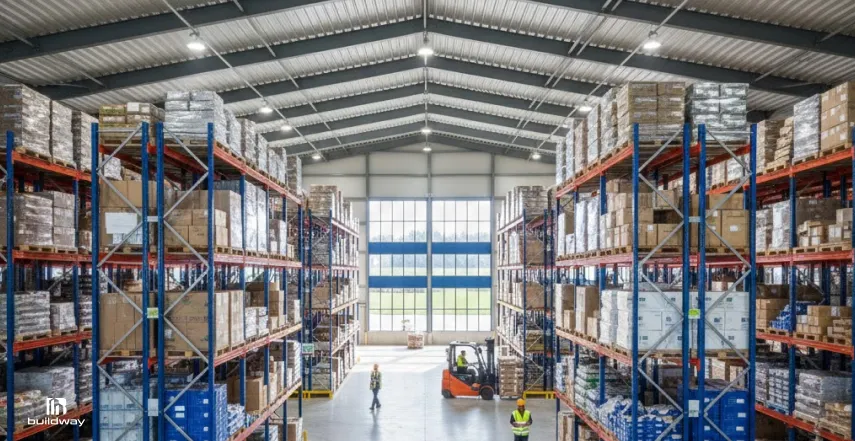
Steel warehouses often feature clear-span interiors, meaning no interior support columns. This allows full use of the floor area, ideal for:
- Wide racking systems
- Machinery movement
- Forklift accessibility’s
Built-In Expansion Capabilities: We engineer many steel warehouses with removable end-walls, making it easy to expand the structure later without significant redesign or disruption. This “right-size now, grow later” approach helps preserve upfront capital and future-proofs your building investment.
Customization options like skylights, oversized doors, and expandable end-walls also make steel a top choice for scalable operations.
Insurance providers often view steel buildings as lower-risk due to their non-combustible materials, engineered design, and resistance to environmental stressors. This can translate into easier approval and more favorable insurance premiums.
How Much Does a Steel Warehouse Cost?
The cost of a steel warehouse building can vary widely based on size, design, location, and site conditions. While generally more affordable than concrete or wood, it’s important to understand what’s included and what’s not.
This section breaks down typical price ranges, kit components, and hidden costs to watch for.
Typical Cost Ranges Per Square Foot
The cost of a steel warehouse building depends on size, location, design complexity, and market conditions. Here’s a general breakdown:
| Building Size | Average Cost (Per Sq. Ft.) | Total Estimated Cost |
| Small (5,000 sq. ft.) | $30–$45 | $150,000–$225,000 |
| Medium (10,000 sq. ft.) | $25–$40 | $250,000–$400,000 |
| Large (50,000+ sq. ft.) | $20–$35 | $1M–$1.75M |
Buildings engineered for vertical or horizontal expansion may carry a slightly higher initial cost, but they offer significantly greater lifetime value by reducing future construction and downtime.
Note: These are base building costs only.
What’s Included vs Not Included in Steel Building Kits
Steel building kits come with the core structural components, but several key elements are not included in the base package. Knowing the difference helps avoid unexpected costs during your project.
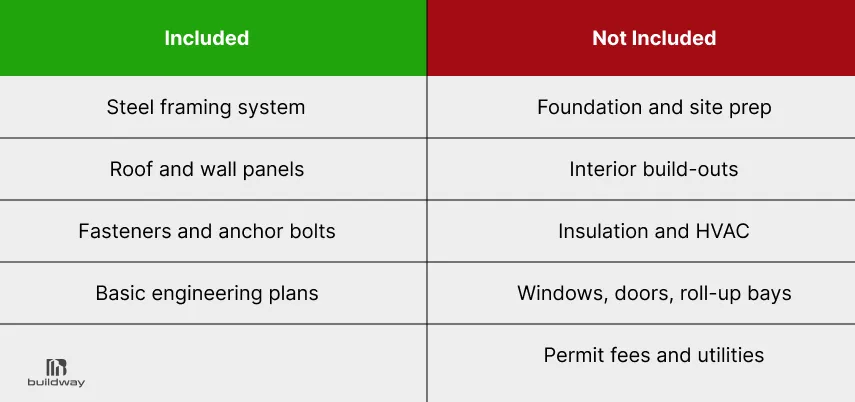
Included:
- Steel framing system (beams, columns, braces)
- Roof and wall panels
- Fasteners and anchor bolts
- Basic engineering plans
Not Included:
- Foundation and site prep
- Interior build-outs (offices, bathrooms)
- Insulation and HVAC
- Windows, doors, roll-up bays
- Permit fees and utilities
Thinking of going the DIY route? Before committing, make sure you understand the real costs and risks of DIY steel building kits. Savings can disappear quickly if key elements are overlooked.
Hidden & Overlooked Costs Buyers Miss
Don’t get caught off-guard. Here are common “hidden” costs:
- Site Preparation: Grading, excavation, and slab pouring can add $5–$10 per sq. ft.
- Utility Hookups: Water, sewer, and electrical lines may require permits and trenching.
- Permit Fees: Vary by city/county; expect $5,000–$15,000+.
- Insulation & Energy Efficiency Upgrades: Critical for climate control and code compliance.
- Poor Insulation Choices: Skimping on insulation can lead to long-term energy losses. Investing in high-performance insulation up front reduces heating and cooling costs for years to come.
Factoring in these often-overlooked costs early helps you set a realistic budget and avoid surprises that can delay or derail your steel warehouse project.
How to Size and Plan a Steel Warehouse
Choosing the right size and layout is key to making your steel warehouse efficient, cost-effective, and built to last. Your building should support day-to-day operations while also allowing room for future growth. In this section, we’ll walk through how to plan for workflow, equipment space, ceiling height, and expansion, so your warehouse fits your business today and tomorrow.
1. Sizing Based on Operations & Workflow
To determine the right size for your steel warehouse building:
- Map out workflows (receiving, storage, shipping)
- Account for racking height and aisle width
- Consider staff space (offices, breakrooms)
2. Ceiling Height, Column Spacing & Door Planning
Key specs to plan:
- Ceiling Height: 20–30 ft. is standard for warehouse use
- Column Spacing: Opt for clear-span design for flexibility
- Doors: Plan for truck bays, roll-up doors, and personnel access
Planning for Future Expansion
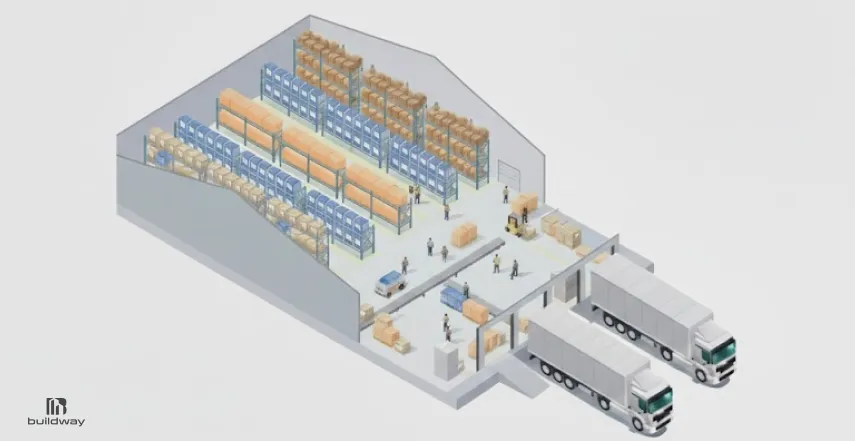
One of the key advantages of steel warehouse buildings is how easily they can be expanded as your business grows. By designing with expansion-ready end-walls from the start, you can avoid costly renovations later.
Here are a few tips to plan effectively for future growth:
- Leave adequate space on your lot for future building extensions.
- Consider modular add-ons that allow for seamless expansion without major structural changes.
- Check zoning and utility access ahead of time to ensure your site can legally and logistically support future additions.
Smart expansion planning ensures your warehouse can scale with your business without needing to start over. Not all suppliers take a proactive approach to growth planning. We engineer buildings with expansion in mind from the start, whether through removable end-walls for outward growth or extra height and load capacity for future mezzanine levels.
Permits, Engineering & Compliance Requirements
Every steel warehouse project must meet local codes, zoning rules, and engineering standards. Getting these details right upfront helps you avoid delays, fines, and costly redesigns. This section outlines the key approvals and documents you’ll need before construction begins.
Do You Need an Engineer or an Architect?
This is a question we hear all the time and the answer depends on the type and complexity of your project.
When you purchase a pre-engineered steel warehouse kit, you’re not starting from scratch. These kits typically include manufacturer-certified structural drawings, such as:
- Structural (STEM) drawings
- Reaction plans
- In some cases, preliminary foundation drawings
These documents are professionally engineered, code-compliant, and tailored to your project’s specifications.
However, most jurisdictions still require a local licensed engineer to review and stamp the plans. Site-specific factors like soil, wind, seismic loads, and local inspection rules vary, and a local engineer ensures compliance helping you avoid delays and secure permit approvals smoothly.
What About an Architect?
For standard warehouse or shell buildings, an architect is usually not required. However, you may need to involve one if your project includes:
- Interior build-outs (offices, breakrooms, restrooms)
- Mezzanine levels
- Custom layouts or multi-use configurations
- Aesthetic upgrades like specialty façades or branded exterior elements
Architects are especially helpful when your building requires a more complex interior or enhanced exterior design.
What This Means for Your Project
Your steel building kit already comes with a strong engineering foundation, but bringing in local professionals early in the process helps ensure:
- Code compliance
- Site-specific adjustments
- Faster permit approvals
- Fewer project delays
With the right experts involved from the beginning, you’ll save time, avoid costly surprises, and move through the build process with greater confidence.
Permitting & Zoning Considerations
Permit requirements vary by region. Key steps include:
- Check zoning regulations for commercial use
- Submit detailed site plans
- Address stormwater runoff and fire codes
- Plan for inspections at each phase
If you’re unsure what approvals apply to your project, this steel building permitting guide breaks down the most common permits required and includes a practical checklist to help you stay compliant from start to finish.
If you plan to expand later either horizontally or with a mezzanine, discuss this upfront with your engineer and local authorities. It may influence foundation requirements and permit approvals.
What Design Work Is Included in Pre-Engineered Systems
Pre-engineered steel building systems come with the core design work needed for structural integrity and fabrication, helping streamline the construction process.
Typically included in the kit:
- Structural engineering for the primary steel frame
- Load calculations for snow, wind, and seismic conditions
- Detailed assembly diagrams for on-site erection
- Foundation Anchor Plans
However, these systems usually do not include site planning or interior layouts. For foundations, utilities, and interior spaces, a local architect or engineer is still required.
Build vs Buy vs Lease: Is a Steel Warehouse Right for You?
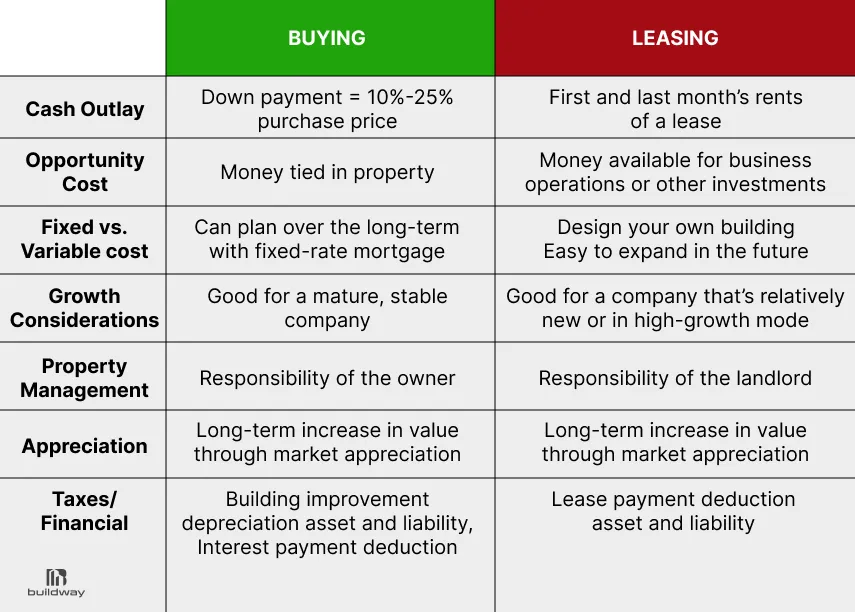
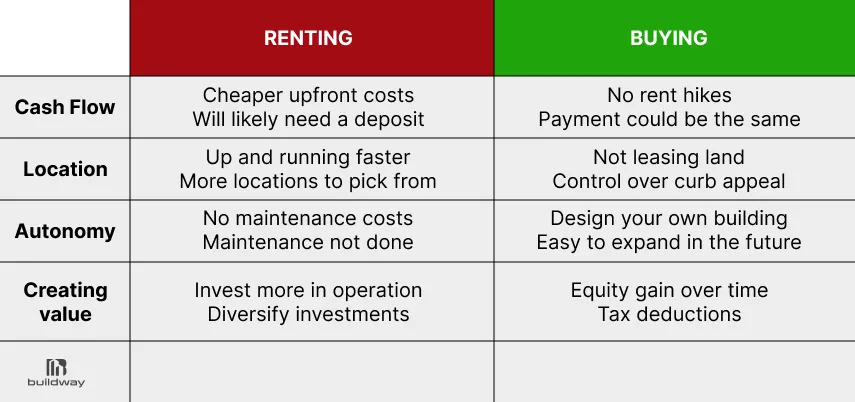
Deciding whether to build, buy, or lease a warehouse depends on your budget, timeline, and long-term business goals. Each option has trade-offs especially when considering flexibility, ownership, and control. This section helps you weigh the pros and cons to determine if a steel warehouse is the right fit for your needs.
1. Ownership vs Flexibility
When comparing build, buy, and lease options, it often comes down to how much control you need versus how quickly you need to operate.
- Build/Buy gives you full ownership, long-term equity, and the ability to customize the space to your exact needs.
- Leasing typically offers a faster move-in and lower upfront costs, but with limited control over modifications, renewals, or long-term use.
Choosing the right path depends on your business priorities, whether you value flexibility or want full control over your facility.
2. Timeline vs Upfront Cost
Speed and cost often pull decisions in opposite directions. Understanding how each option impacts both can help you choose the right path.
- Building a steel warehouse typically takes 4–8 months, but offers a purpose-built facility designed around your needs.
- Buying an existing building can shorten the timeline, though compromises on layout or condition are common.
- Leasing provides the fastest occupancy and lowest upfront cost, but limits long-term flexibility.
3. Long-Term Operational Control
Owning your warehouse gives you greater control over how the space evolves with your business. Key advantages include:
- A facility tailored to your operations and workflow
- The ability to expand or upgrade on your schedule
- Long-term asset value and potential equity growth
For businesses planning to scale, ownership often delivers the strongest long-term return.
Conclusion
Steel warehouse buildings offer speed, strength, and flexibility, a powerful combination for growing businesses. With the right planning, they can serve as cost-effective, scalable solutions for storage, logistics, manufacturing, and more.
By understanding total project costs, sizing requirements, permits, and your long-term operational needs, you’ll be well-positioned to make a smart, future-ready investment.
Here’s how to move forward:
- Gather key project info such as site location, building size, usage, and desired timeline.
- Request a quote from a reputable supplier, and ask for itemized pricing to avoid hidden costs.
- Plan your timeline realistically, allowing 1–2 months for engineering and approvals, and 2–3 months for construction.
- Double-check what’s included in your quote. Steel kits often exclude site work, insulation, or doors.
Ask your supplier if the building is engineered for future horizontal or vertical expansion. This ensures your investment grows with your business.
Ready to Get Started?
- Get a Steel Warehouse Cost Estimate
- Talk to a Building Specialist: Get expert guidance tailored to your project.
Your ideal steel warehouse starts with a well-informed plan and we’re here to help you build it with confidence.
Frequently Asked Questions
1. How long does it take to build a steel warehouse?
Most steel warehouse buildings take 4 to 8 months from planning to completion. This timeline depends on factors like permitting, site preparation, building size, and supplier lead times.
2. Can you expand a steel warehouse later?
Yes, pre-engineered steel buildings can be designed for easy future expansion. Features like expandable end-walls and modular layouts make it simple to add square footage as your needs grow.
3. Are steel warehouses energy-efficient?
Steel warehouses can be highly energy-efficient when properly insulated and equipped with HVAC systems. Insulation, reflective roof coatings, and ventilation systems all contribute to lower energy costs.
4. Do you need a permit to build a steel warehouse?
Yes, building a steel warehouse requires local permits and zoning approval. Most jurisdictions will also require stamped engineering drawings and compliance with fire, stormwater, and accessibility codes.
5. What’s the difference between a metal building and a steel building?
The terms are often used interchangeably, but “steel” refers specifically to the material used in the structure making it a subtype of metal buildings. Steel is preferred for its strength and durability.
6. How much does a steel warehouse cost per square foot?
Steel warehouse buildings typically cost between $25 and $50 per square foot, depending on size, location, design complexity, and included features. This range covers only the base building: site work, utilities, and interior build-outs are additional.
7. What’s included in a steel building kit?
Most kits include the steel frame, roof and wall panels, fasteners, and basic engineering plans. Items like foundation work, insulation, doors, windows, and utilities are usually not included and must be sourced separately.
8. Is a steel warehouse suitable for cold climates?
Yes, steel warehouses perform well in cold climates when designed with proper insulation, snow load engineering, and heating systems. Pre-engineered systems can be tailored to meet local weather conditions.