

If you’re searching for the cheapest steel building types in 2026, you’re in the right place. Steel buildings are affordable, fast to install, and durable making them a top choice for homeowners, small business owners, and DIYers alike. But not all steel buildings are created equal when it comes to cost.
In this 2026 cost guide, we break down the 9 most affordable steel building types, with real price examples (including Reddit stories), kit vs. installed price comparisons, and practical tips to reduce your total spend.
Disclaimer: Prices can vary based on your location, site conditions, and whether you choose a DIY kit or hire a contractor for full installation. All ranges below reflect 2026 pricing data and should be used as general estimates.
How We Ranked the Cheapest Steel Buildings
We evaluated steel buildings based on total cost-to-build, including both kit prices and potential installation expenses. The list reflects buildings that offer the lowest cost per square foot, are widely available in 2026, and serve practical use cases.
What “Cheapest” Actually Means
Not all low-cost steel buildings offer the same value. Here’s how we define the “cheapest” in this guide:
- Kit Price vs. Installed Cost: A building kit may be inexpensive, but total installed costs (foundation, labor, etc.) could increase the final price significantly.
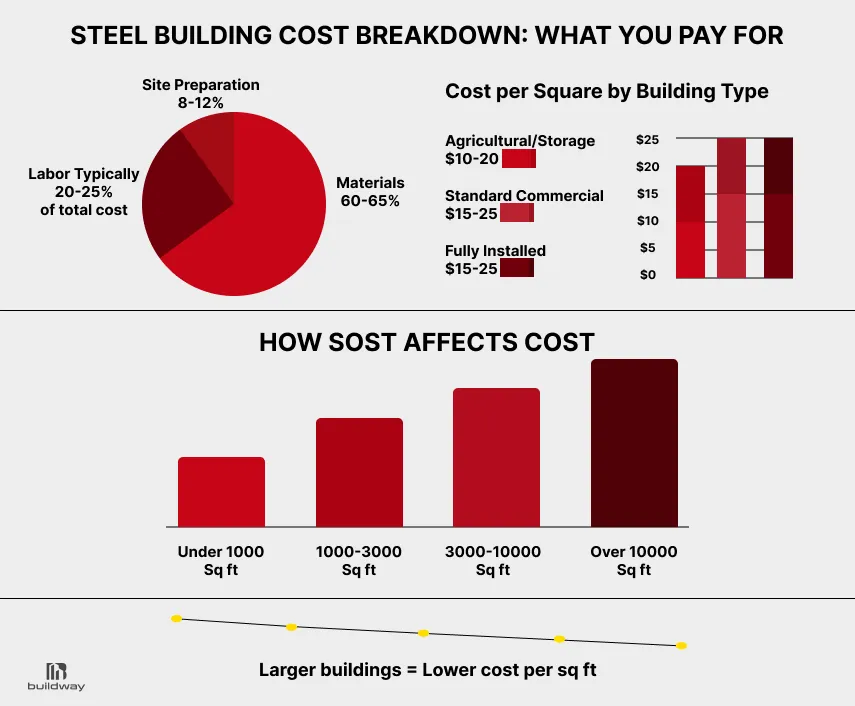
- Cost per Square Foot vs. Total Spend: We consider both. A large building may have a low per-square-foot cost but a higher total investment. Smaller buildings often win in total dollars spent.
Data Sources Used
To make this blog as accurate as possible, we pulled 2026 pricing data from:
- Leading steel building manufacturers
- Reddit user reports from r/HomeImprovement, r/Barndominiums, and more
- Verified industry benchmarks and cost averages
What Affects the Cost of a Steel Building?
While steel buildings are known for their modular design and cost-efficiency, several key factors can significantly influence the final price. Understanding these variables will help you plan more accurately and avoid unexpected expenses. Here’s what to keep in mind when budgeting for your steel building project:
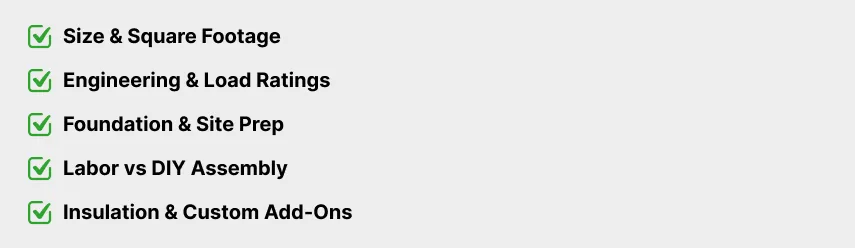
- Size & Square Footage: Larger buildings typically have a lower cost per square foot but a higher overall price, whereas smaller buildings tend to be more expensive per square foot yet cheaper in total.
- Engineering & Load Ratings: Snow load, wind resistance, and local code compliance increase structural requirements and cost.
- Foundation & Site Prep: Grading, concrete pads, and soil conditions can add $5,000–$25,000+ depending on site complexity.
- Labor vs DIY Assembly: DIYers can save 30–50% by building kits themselves, while hiring professionals increases costs but saves time and ensures code compliance. Learn more in our guide: DIY Metal Building Kits: How Much Can You Really Save?
- Insulation & Custom Add-Ons: Insulation, HVAC, windows, and finishing details can easily double your final spend.
Tip: Keep your design simple and stick to standard sizes to reduce cost.
The 9 Cheapest Steel Building Types (Ranked)
In 2026, steel buildings remain one of the most cost-effective construction options. Below, we’ve ranked the most affordable steel building types based on upfront costs, cost per square foot, and how practical they are for real-world use. This list will help you find the best value for your budget.
1. Small Steel Sheds & Carports
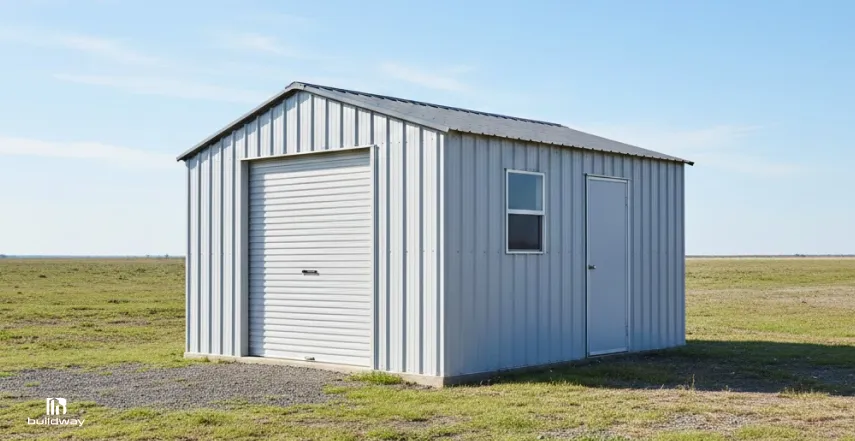
The cheapest entry point into steel construction.
Small steel sheds and carports are the most affordable steel structures available in 2026. They’re ideal for basic protection and storage needs without the cost or complexity of a full building.
- Typical Cost: $1,000–$10,000
- Cost Per Sq Ft: ~$5–$15
- Best For: Storage, vehicle coverage, lawn equipment
- Pros: Extremely low upfront cost, minimal permitting in many areas
- Cons: Limited functionality, usually not enclosed or insulated
- Reddit Users Say: “Bought a prefab carport for $2,300—installed it myself in a weekend.”
- Cost-Saving Tip: Buy unassembled kits online and handle installation yourself.
If your goal is the lowest possible spend, this is the cheapest steel building type you can buy.
2. Sea Container Covers
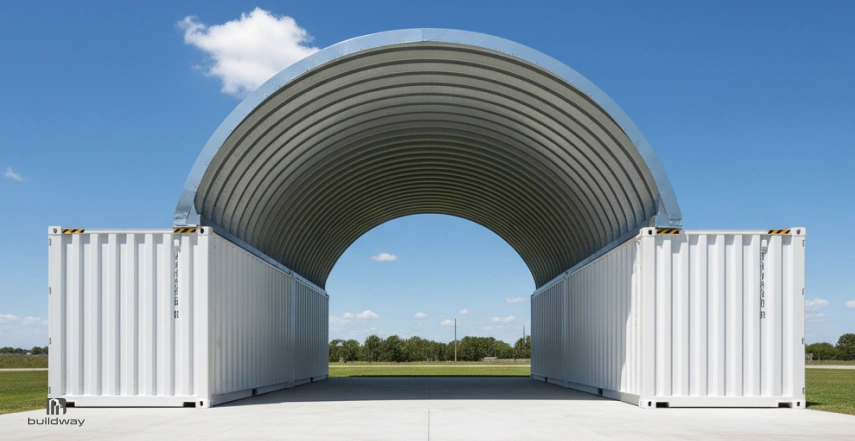
Budget-friendly shelter using what you already have.
Sea container covers are a smart, affordable steel structure solution, especially if you already have shipping containers on-site. These roof-only systems span across two containers to create a sheltered, open-air workspace ideal for storage, equipment protection, and temporary operations.
- Typical Cost: ~$10–$18 per sq ft (cover only)
- Best For: Equipment storage, temporary warehousing, on-site workshops, agricultural use
Pros:
- Cost-effective use of existing containers
- Quick to install
- Expandable and modular
- Doesn’t always require a permanent foundation
Cons:
- Requires existing containers (or additional cost to acquire)
- Limited wall enclosure (open sides unless modified)
Reddit Users Say: “Used a container cover for our farm gear, worked great through two winters, no rust, no leaks.”
Cost-Saving Tip: Buy just the cover kit and repurpose used containers for the side walls to save on framing and foundation costs.
These structures are ideal for budget-conscious users needing fast, weather-resistant coverage without the cost of a fully enclosed building.
3. Quonset Hut–Style Steel Buildings
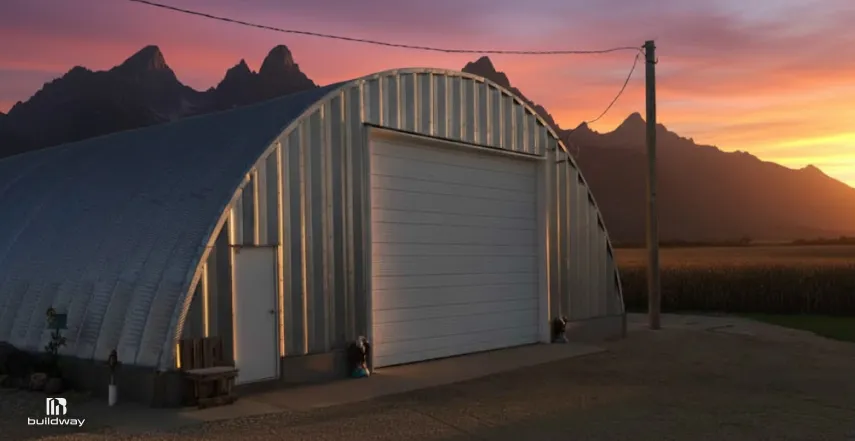
Maximum strength with minimal materials
Quonset huts are a strong contender for budget-conscious builders thanks to their self-supporting design and low material cost.
- Typical Cost: ~$12–$20 per sq ft
- Best For: Workshops, garages, warehouses
- Pros: Self-supporting structure, no interior columns
- Cons: Curved walls can limit interior finishing options
- Reddit Users Say: “No interior beams = huge open floor plan for cheap.”
- Cost-Saving Tip: Choose standard widths to avoid expensive custom fabrication.
Quonset huts deliver excellent durability and open space at a very competitive price. Get the full picture in our article: Thinking About Quonset Buildings? Facts, Myths, and Real-World Uses.
4. Pole Barns / Barndominium Shells
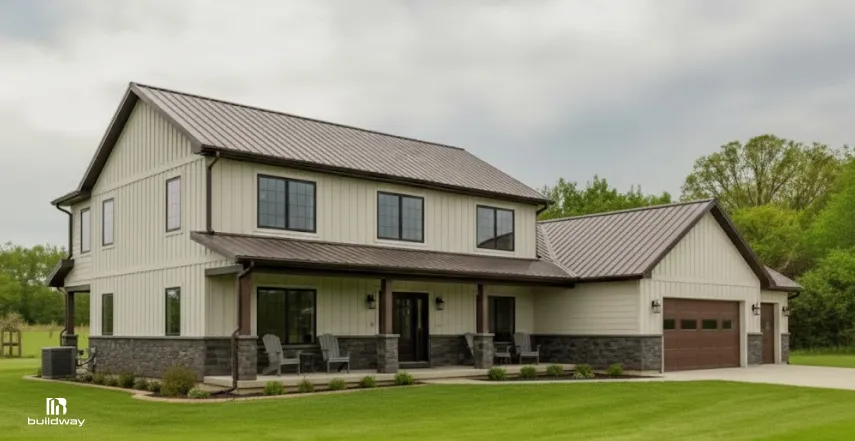
Low-cost framing with long-term flexibility
Pole barns and barndominium shells are popular in rural areas thanks to their simple structure and adaptable interiors.
- Typical Cost: $10,000–$35,000 (depending on size)
- Best For: Rural homes, livestock, hybrid living/work spaces
- Pros: Low structural costs, flexible interior layouts
- Cons: Interior finishing requires careful planning
- Reddit Users Say: “Built a 30×40 shell for $22K DIY—great starting point for our barndo.”
- Cost-Saving Tip: Build the shell first and finish the interior gradually as budget allows.
These buildings are ideal if you want a low-cost shell with room to grow over time.
5. Basic Steel Workshop Buildings
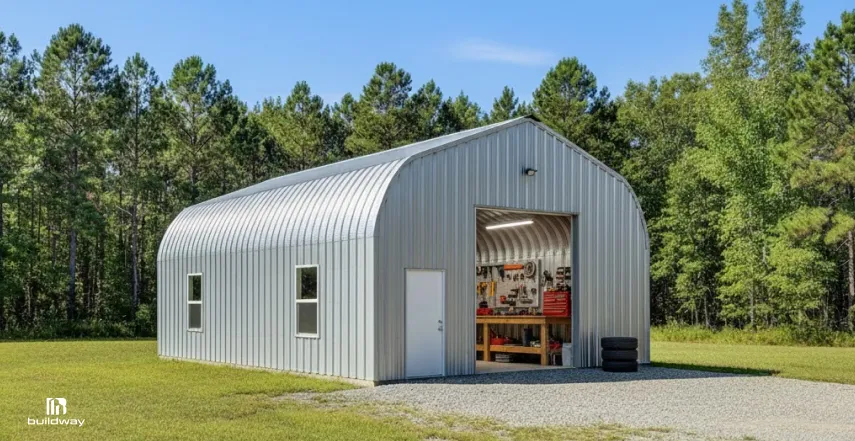
A favorite among DIY builders and small businesses
Basic steel workshop buildings strike a balance between affordability and functionality, making them one of the most popular options on this list.
- Typical Cost: ~$12,000–$30,000 (kit)
- Cost Per Sq Ft: ~$15–$25
- Best For: Mechanics, fabricators, home-based businesses
- Pros: Designed for DIY assembly, customizable layouts
- Cons: Zoning and utility requirements may apply
- Reddit Users Say: “My 30×50 shop kit was $18K—did everything but electric myself.”
- Cost-Saving Tip: Handle site prep and foundation work yourself to reduce costs.
This is one of the best-value steel buildings for serious work without a high price tag.
6. Garage-Style Steel Buildings
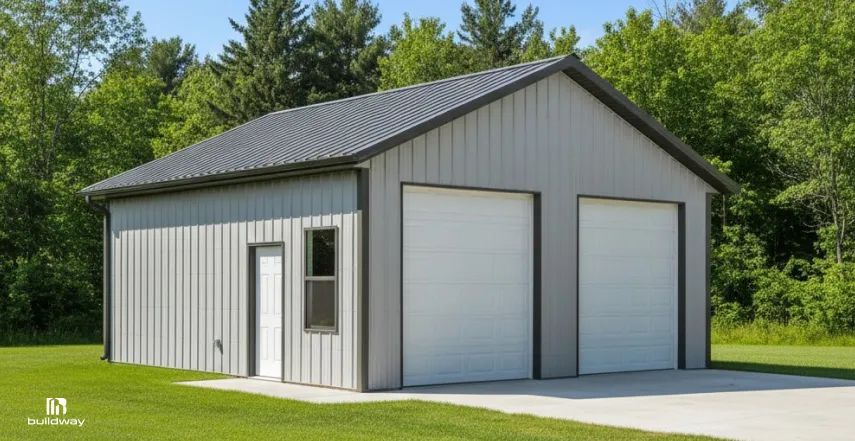
Affordable vehicle storage with a clean footprint
Garage-style steel buildings are compact, efficient, and cost-effective, especially compared to traditional wood garages.
- Typical Cost: ~$15–$20 per sq ft
- Best For: Vehicle storage, small workshops, light commercial use
- Pros: Efficient design, lower insulation needs
- Cons: Not ideal for converting into living space
- Reddit Users Say: “$21K total for a 2-car steel garage, including slab: cheaper than wood by far.”
- Cost-Saving Tip: Skip insulation if the building is only used for storage.
A steel garage offers long-term durability at a lower cost than most traditional options.
7. Pre-Engineered Metal Buildings (PEB)
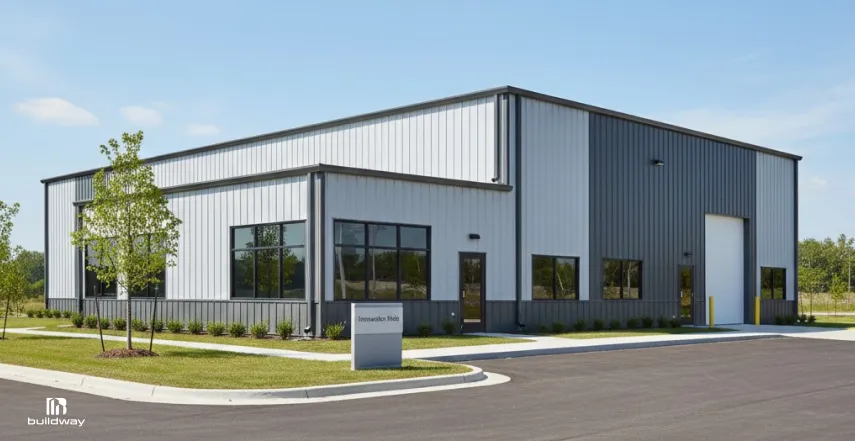
The best value for medium to large structures
Pre-engineered metal buildings are optimized for efficiency, making them surprisingly affordable at larger sizes.
- Typical Cost: ~$18–$30 per sq ft
- Best For: Warehouses, retail spaces, equipment storage
- Pros: Reduced steel waste, engineered for strength and efficiency
- Cons: Higher upfront cost than basic kits
- Reddit Users Say: “Best bang for the buck for our ag warehouse: 35% cheaper than stick-built quotes.”
- Cost-Saving Tip: Stick to standard sizes and roof pitches to avoid added engineering costs.
For larger projects, PEBs often deliver the lowest cost per square foot.
8. Insulated Steel Buildings
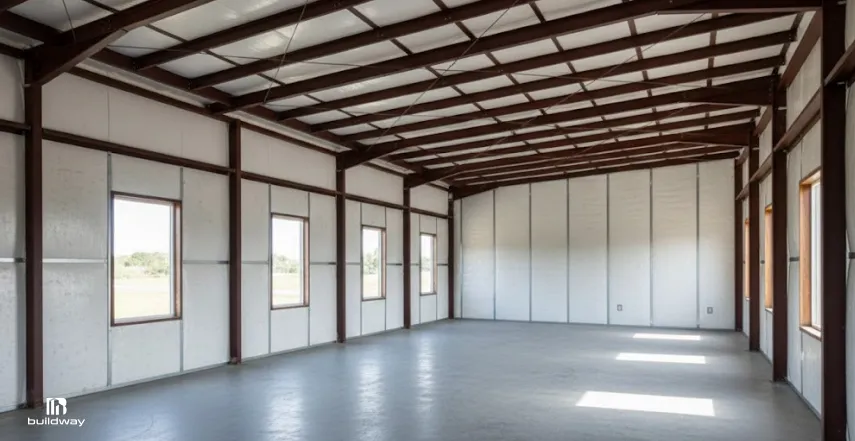
Higher upfront cost, better long-term comfort
Insulated steel buildings cost more initially but offer energy savings and year-round usability.
- Typical Cost: ~$25–$45 per sq ft
- Best For: Extreme climates, workshops, living spaces
- Pros: Improved comfort, better energy efficiency
- Cons: Higher total build cost, longer installation time
- Reddit Users Say: “Added spray foam for $6K—worth every penny in the winter.”
- Cost-Saving Tip: Use batt insulation instead of spray foam if the budget is tight.
Insulation adds cost but pays off in comfort and long-term efficiency.
9. Custom / Architectural Steel Buildings
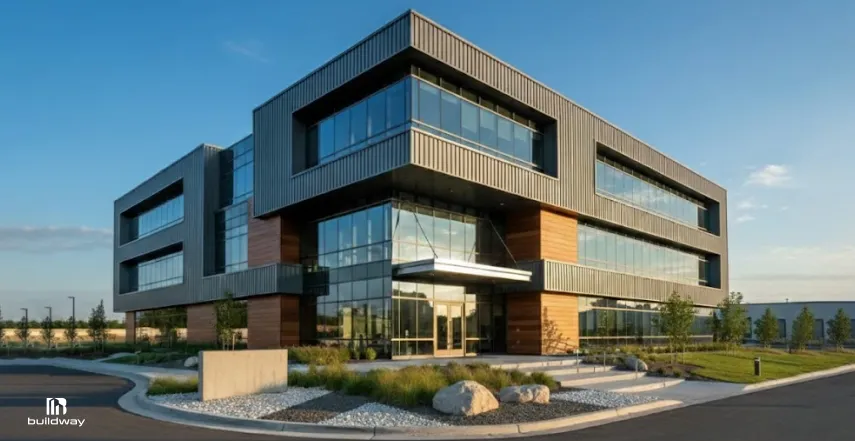
Maximum design freedom at a premium price
Custom steel buildings are designed from the ground up, offering unmatched flexibility but at the highest cost.
- Typical Cost: $40–$100+ per sq ft
- Best For: Modern homes, commercial spaces, event venues
- Pros: Unlimited design options, unique aesthetics
- Cons: Highest cost, longer engineering and permitting process
- Reddit Users Say: “Designing from scratch was amazing but pricey. $80K+ for 1,500 sq ft.”
- Cost-Saving Tip: Start with a standard steel shell and add architectural features later.
Custom steel buildings make sense only when design flexibility outweighs budget concerns.
Steel Building Cost Per Square Foot 2026 Comparison
| Building Type | Kit Cost/Sq Ft | Installed Cost Range |
| Small Sheds & Carports | $5–$15 | $1,000–$10,000 |
| Sea Container Covers | $10–$18 | $8,000–$25,000 |
| Quonset Huts | $12–$20 | $15,000–$40,000+ |
| Pole Barn Shells | $10–$25 | $15,000–$50,000+ |
| Basic Workshops | $15–$25 | $20,000–$40,000+ |
| Garage-Style | $15–$20 | $18,000–$35,000+ |
| Pre-Engineered Buildings (PEB) | $18–$30 | $25,000–$80,000+` |
| Insulated Steel Buildings | $25–$45 | $40,000–$100,000+ |
| Custom Steel Buildings | $40–$100+ | $60,000–$200,000+ |
How Can I Get the Cheapest Steel Building?
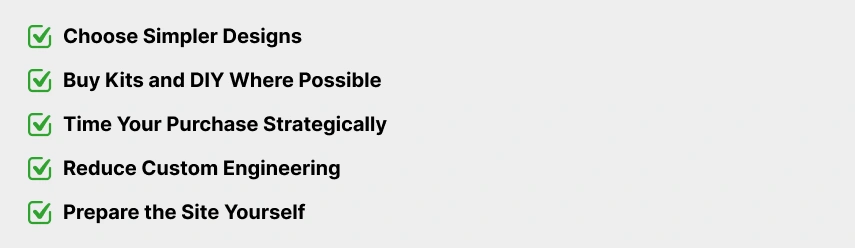
If your goal is to minimize costs without sacrificing quality, a few strategic decisions can make a significant difference. From design choices to timing your purchase, the steps below can help you secure the cheapest steel building possible while avoiding unnecessary expenses.
- Choose Simpler Designs: Straightforward layouts with standard roof pitches are far more affordable than complex or custom designs. Simpler structures require less engineering, use less steel, and are faster to manufacture.
- Buy Kits and DIY Where Possible: Purchasing a steel building kit and assembling it yourself can reduce total costs by 30–50%. Many kits are designed for DIY installation, making them a practical option for hands-on builders.
- Time Your Purchase Strategically: Steel building prices often dip during slower seasons, such as late fall or winter. Ordering during these periods can lead to meaningful discounts from manufacturers.
- Reduce Custom Engineering: Pre-engineered buildings are optimized for efficiency and cost. Sticking to standard sizes and specifications helps avoid added engineering fees and excess material costs.
- Prepare the Site Yourself: Handling basic site work such as clearing, grading, and foundation preparation can save thousands of dollars before the building even arrives.
If you’d like, I can also tighten this further for featured snippet optimization or make it more conversion-focused for SEO.
Prefab vs Custom Steel Buildings: Which Is Cheaper?
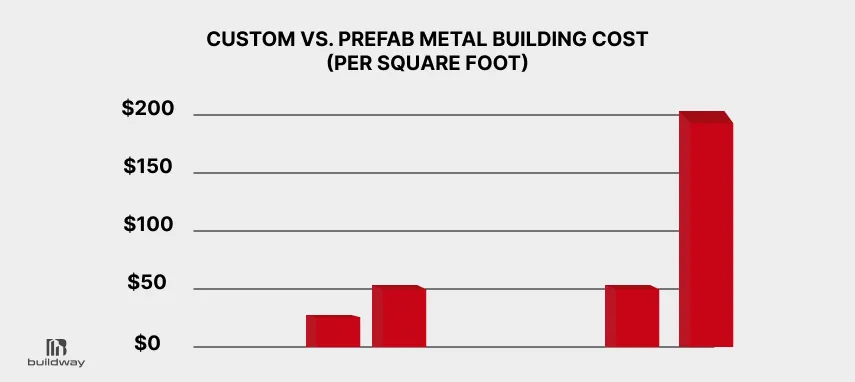
When deciding between prefab and custom steel buildings, cost is often the deciding factor and in 2026, prefab steel buildings remain the more affordable option by a wide margin.
Why Prefab Steel Buildings Cost Less
Prefab (pre-engineered) steel buildings are mass-produced using standardized designs and components. This manufacturing efficiency significantly reduces both material waste and labor costs. Because they’re built off-site and shipped in ready-to-assemble kits, prefab buildings are also quicker to install, further lowering expenses.
The Cost of Custom Steel Buildings
Custom steel buildings, on the other hand, are tailored to specific design preferences or functional needs. They often require:
- Unique engineering and architectural plans
- Custom steel fabrication
- Additional permitting and inspections
- Specialized labor for assembly
These added requirements can increase total costs by 30–70% or more compared to a similar-sized prefab building.
Prefab Wins on Price: If you’re working with a limited budget or looking for the most cost-effective way to build, prefab steel buildings offer the best value. They provide reliable durability and speed without the premium price tag that comes with custom design.
Tip: You can always start with a prefab shell and add custom features later as your budget allows.
Don’t Overpay for Your Steel Building
Choosing the right steel building is only half the equation, avoiding hidden costs, delays, and inflated quotes is just as important. Whether you’re planning a small shed, a garage, or a sea container cover system, being informed from the start can save you thousands.
At Buildway, we make it easier to plan smart and build affordably, with transparent pricing, expert support, and real-world solutions tailored to your needs.
Here’s How to Get Started:
- Get a Custom Quote based on your exact project specs
- Contact Our Team with questions or for expert guidance
- Browse Clearance Deals on discounted steel building kits and accessories
Whether you’re in the early planning stage or ready to build, we’re here to help you make it happen, without overpaying.
FAQs About Steel Building Costs
1. What is the cheapest steel building type?
The cheapest steel building types in 2026 are small sheds, carports, and sea container cover systems. These options often start under $2,000, especially when purchased as kits and installed by the owner. They require minimal engineering and are ideal for basic storage, vehicle cover, or open-air workspaces.
2. How much does a steel building cost per square foot in 2026?
In 2026, most prefab and modular steel buildings cost between $10 and $45 per square foot, depending on size, design complexity, and whether the price includes just the kit or full installation. This estimate does not include site preparation, foundation work, or utilities.
3. Is a prefab steel building cheaper than a custom one?
Yes, prefab steel buildings are significantly cheaper than custom builds. On average, they cost 30% to 70% less, thanks to standardized designs, bulk manufacturing, and reduced labor costs. Prefab kits are also quicker to install.
4. What hidden costs should I expect when buying a steel building?
Common hidden costs include:
- Site preparation and grading
- Concrete slab or foundation work
- Permits and inspections
- Insulation and interior finishing
- Electrical and plumbing setup
These can add several thousand dollars to your total budget, depending on your location and building type.
5. Can I build a steel building myself?
Yes, many steel building kits are designed for DIY assembly. If you’re comfortable with basic tools and follow instructions carefully, you can save 30–50% in labor costs. Reddit users frequently share successful DIY build experiences.
6. Are steel building kits worth it?
Steel building kits are a great value if you want to save on construction costs. They come pre-cut and pre-drilled for easy assembly, and many include all necessary hardware. They’re ideal for workshops, garages, and agricultural buildings.
7. What’s the most cost-effective size for a steel building?
Buildings between 1,200 and 2,500 square feet often offer the best cost-per-square-foot value. They strike a balance between size efficiency and manageable material/labor costs, especially for workshops and small businesses.
8. Do I need a permit for a prefab steel building?
Yes, in most areas, you’ll need a building permit for any steel structure, even if it’s a kit. Requirements vary by city or county, so check with your local building department before starting your project.
9. How long does it take to install a prefab steel building?
Most prefab steel buildings can be installed in 1–3 weeks, depending on size, weather, and whether you hire a crew or build it yourself. Smaller structures like carports may go up in just a few days.